


Prasad Karanam
VP, Product
If you layer AI on top of a broken intake process, you will still get broken results
Nowhere is this disconnect more evident than in specialty pharmacy intake. Rising therapy complexity, increased payer scrutiny, persistent staffing constraints, and fragmented systems have turned what should be a foundational workflow into a chronic bottleneck. Routine intake delays therapy starts, increases downstream rework, and quietly erodes operating margins. Leaders consistently describe the same pain points: manual handoffs, incomplete referrals, limited visibility into prior authorization risk, and teams overwhelmed by repetitive, non-clinical work.
Intake is not just the first step in the patient journey; it is one of the largest sources of operational friction, financial exposure, and staff burnout in specialty pharmacy today.
When Intake Breaks, Patients Feel It First
Specialty drug patients represent a relatively small portion of the U.S. population, yet they account for a disproportionate share of total drug spending. National projections estimate total U.S. prescription drug spend at approximately $800+ billion annually6, with specialty medications accounting for nearly half of that spend, driven by biologics, oncology, rare disease therapies, and the rapid expansion of cell and gene therapies.
• More than one-quarter of branded prescriptions go unfilled
• Over half of newly launched specialty prescriptions never reach patients
• Fewer than one-third of patients remain on therapy after the first year
These are not abstract statistics. In specialty pharmacy, intake is where these failures often begin.
As specialty spend continues to grow, pressure on intake, prior authorization, and revenue cycle workflows intensify. This reality has been repeatedly highlighted in NHIA educational sessions and Asembia roundtables, where operators emphasize that intake breakdowns are rarely caused by a lack of data but by a lack of coordination, context, and workflow intelligence.
“Imagine being told by your doctor that the condition you’ve been diagnosed with requires a specialty medication, but you may not be able to start treatment for weeks due to outdated processes and paperwork required for prior authorization,” said Cecelia Byers, Pharm.D., Clinical Product Advisor for Specialty at Surescripts9.
Delayed Time to Therapy Has a Quantifiable Impact
Specialty medications, many costing $5,000–$10,000 per month or more, are designed to treat serious, chronic, or life-threatening conditions. Yet surveys of specialty prescribers and pharmacists consistently show that intake and prior authorization delays push time to therapy well beyond acceptable windows.
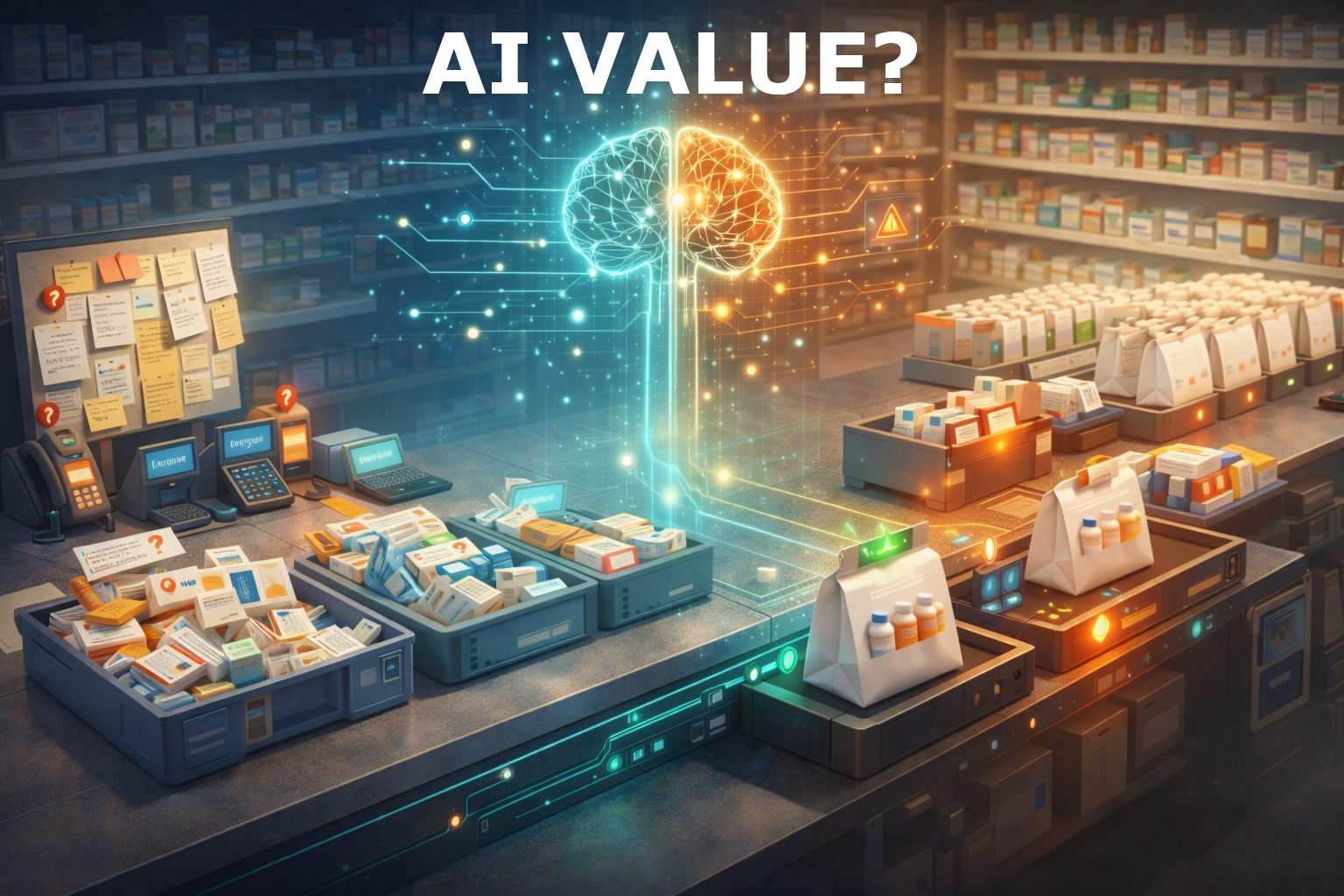
Yet intake remains largely manual, fragmented, and error prone. Referral documents arrive via fax, portal uploads, or EHR messages. Staff must reconcile clinical notes, benefits data, payer rules, and authorization requirements across disconnected systems. It is within this complexity that many vendors claim AI can help, but the way AI is evaluated often misses the point.
Intake Is a Workflow Problem, Not Just a Model Problem
The Metric Trap
Intake workflows do not treat all errors equally, yet most AI metrics do.
Consider a common intake scenario:
A referral arrives for a CAR-T patient. The high-cost oncology therapy is processed by an AI intake tool. The model accurately extracts patient demographics and medication name, achieving excellent extraction scores (99% accuracy). However, it fails to recognize a required staging note embedded in the clinical documentation — a payer-specific requirement. The prior authorization is submitted incomplete, denied days later, reworked manually, and resubmitted. Therapy is delayed by nearly 21 days.
What Real AI Value in Intake Should Look Like
AI adds value in specialty pharmacy intake only when it is embedded into workflows and trained to reflect operational reality. True value looks like this:
Contextual understanding — not just capture
AI must go beyond text extraction to interpret clinical meaning, payer logic, and coverage nuance. It should identify missing or mismatched information before work enters prior authorization queues, not after denials occur.
Workflow intelligence and prioritization
Effective intake AI should:
• Instantly flag incomplete referrals
• Prioritize cases with the highest risk of delay or denial
• Apply payer-specific rules and definitions dynamically
This shifts intake from reactive cleanup to proactive risk management.

Deep integration with core systems
Workflow-embedded AI connects directly with pharmacy management systems, prior authorization platforms, benefits verification tools, and payer portals. Standalone AI modules that require manual uploads or handoffs often increase fragmentation rather than reduce it.
Why This Matters Now
Specialty pharmacy spend continues to rise. Patient populations are expanding. Competition among specialty pharmacies has intensified. In this environment, intake efficiency is no longer a back-office concern, but it is a determinant of patient access, payer trust, and financial sustainability.
The American Society of Health-System Pharmacists has emphasized that while AI can reduce manual burden and improve clinician satisfaction, pharmacy teams must lead evaluation and implementation using the right metrics8.
High model performance alone does not guarantee operational value.
Specialty pharmacies that conflate the two, risk investing in technology that looks advanced but leaves intake outcomes unchanged.
The Bottom Line
AI that performs well in isolation is not enough. In specialty pharmacy intake, value is proven only when AI improves workflows, reduces errors, shortens time to therapy, and lowers downstream cost. In practical terms, value is created when the gap between a written prescription and a filled prescription meaningfully narrows.
That requires moving beyond model metrics and designing intelligence where the work actually happens. As a founding member of NASP and an active participant in NHIA and Asembia, Keycentrix purpose-builds intake technology informed by real operational challenges.
References
- American Medical Association, Prior Authorization Survey, 2024
- American Medical Association, Prior Authorization Delays Care and Increases Healthcare costs, 2024
- Specialty Pharmacy Continuum, Half of Novel Specialty Prescriptions Go Unfilled, IQVIA Data Show, 2026
- AARP, Trends in Retail Prices of Prescription Drugs, 2024
- Journal of Managed Care and Specialty Pharmacy, The Association Between Cost Sharing, Prior Authorization, and Specialty Drug Utilization, 2023
- American Society of Health-System Pharmacists, National Trends in Prescription Drug Expenditures and Projections for 2025, 2025
- MIS Quarterly. Is AI Ground Truth Really True? The Dangers of Training and Evaluating AI Tools Based on Experts’ Know-what, 2021
- ASHP. AI Helps Pharmacists Streamline Routine Tasks, 2025
- Surescripts, Inaccurate and Incomplete Data Delays Specialty Treatment for Patients and is Top Stressor for Health Care Providers, 2022


Take a Tour
Contact us at 1-800-444-8486 or drop us a line to request a tour of our Newleaf pharmacy management software.
Schedule a Demo